Short answer
When buying a house with a septic system, order a full septic inspection (not a visual one) during your inspection contingency, get the permit and pumping records from the seller and the county, and confirm the system is sized for the number of bedrooms. A failing system can cost $5,000 to $20,000 or more, so this is the inspection that protects you most.
1Records to request
- County permit and as-built drawingTank size, location, field layout
- Pumping receiptsDates and sludge readings
- Repair historyPump, baffles, field work; compare with typical tank life
- System typeGravity, mound, aerobic
- Service contractRequired for some aerobic units
- Prior inspection reportsFrom earlier sales
The county health department usually holds the permit file. If no permit exists, the system may predate permits, or it may have been installed without one; both are worth knowing before you buy.
2The inspection to order
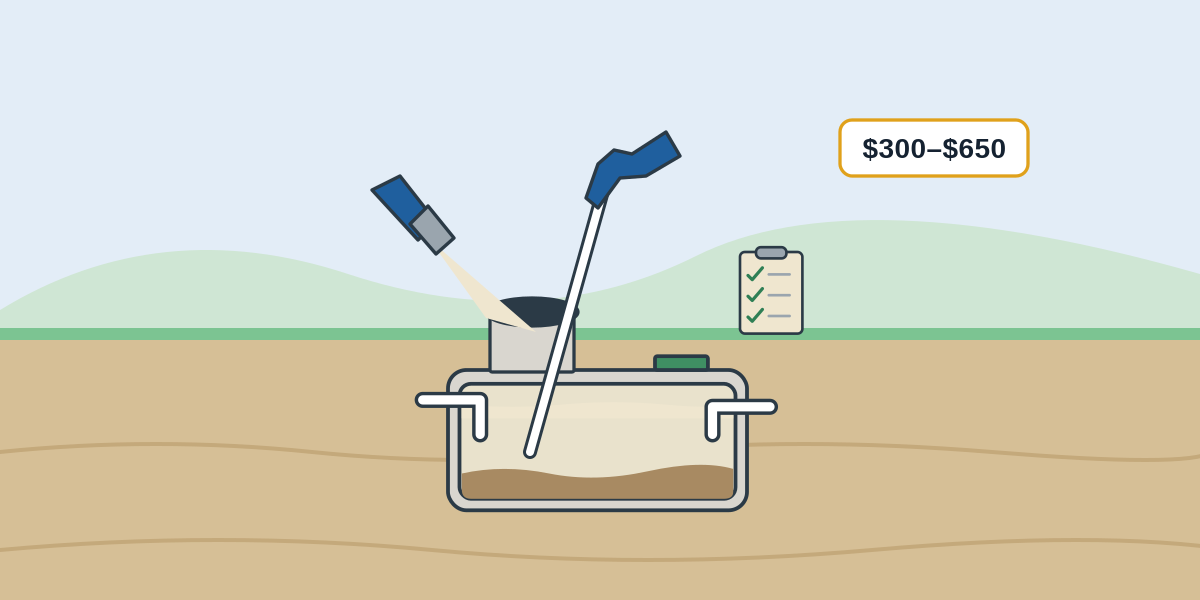
Ask for a full inspection with the tank pumped, by an inspector the seller did not hire. It should check the sludge level, both baffles, the tank walls, the distribution box and the drain field, and run water through the house. See what a septic inspection costs and what each type covers.
Some states require an inspection when a home is sold; Massachusetts is the best-known example. Your agent or county can tell you whether yours does.
3Red flags
Wet or green strips
Over the field in dry weather.
More bedrooms than the permit
System undersized.
No pumping records
Unknown history.
Trees or a driveway on the field
Roots or crushed pipe.
A recently pumped tank before your inspection is not proof of health. A freshly emptied tank hides how fast it fills and how the field copes; ask when it was pumped and why.
4If the inspection finds problems
Small repair
Baffle, lid, pump or filter. Ask the seller to fix it or credit you.
A few hundred to a few thousand dollarsFailing field
Get a written estimate and negotiate the price, an escrow, or walk away.
$5,000–$20,000+5If the home also has a well
Most homes with septic also have a private well. The tank and field must sit a minimum distance from the well, set by your state. Order a water test for bacteria and nitrate at the same time; see buying a house with a well.
6Common questions
Is a home on septic a bad buy?
No. A well-kept system works for decades and has no monthly sewer bill. The risk is an unknown or failing system, which a full inspection uncovers.
Who pays for the septic inspection?
Usually the buyer. In states that require one at sale, the seller often pays. It is negotiable.
Can my lender require an inspection?
Some loans, including many FHA and VA loans, require the system to be working. Ask your lender early.
What to check when buying a house with septic in winter?
A frozen yard hides wet spots over the field, so a full inspection with the tank opened matters even more. Ask the seller for the septic system pumping records from the last few years.
Sources
- Title 5 septic system inspections, Massachusetts DEP · accessed Nov 22, 2026
- How to care for your septic system, U.S. EPA · accessed Nov 22, 2026
- Septic tank inspection price data, HomeGuide · accessed Nov 22, 2026
Drafted with AI from the cited sources; reviewed and approved by Ben Carter. How we write and check guides

Ben Carter, plumber, septic and private well systems. About the author · Editorial policy