Short answer
How to test well water, in short: order a lab test from a state-certified lab at least once a year for total coliform bacteria, nitrate, total dissolved solids and pH, as the CDC recommends. Add tests for arsenic, radon, lead or other contaminants common in your area, and test again after floods, repairs or any change in taste, smell or color.
1What to test for
| Test | How often | Why |
|---|---|---|
| Total coliform bacteria | Every year | Shows if surface water or waste can reach the well |
| Nitrate | Every year | Comes from fertilizer, manure and septic systems |
| pH and total dissolved solids | Every year | Corrosion, scale and general water quality |
| Arsenic, uranium, radon | Once, then every few years | Natural in some rock; ask your state |
| Lead and copper | Once, and if pipes change | Comes from plumbing, not the well |
| Iron, manganese, hardness | When stains or taste appear | Sizes treatment equipment |
2When to test more often
- After flooding near the wellBacteria test before drinking
- After well or pump repairsWork can introduce bacteria
- Buying a homeSee the buyer's checklist
- A new taste, smell or colorSee cloudy water or rotten egg smell
- A baby or pregnancy in the homeNitrate matters most for infants
- A septic problem nearbyBacteria and nitrate
- After shock chlorinationConfirms it worked
3How to test well water with a clean sample
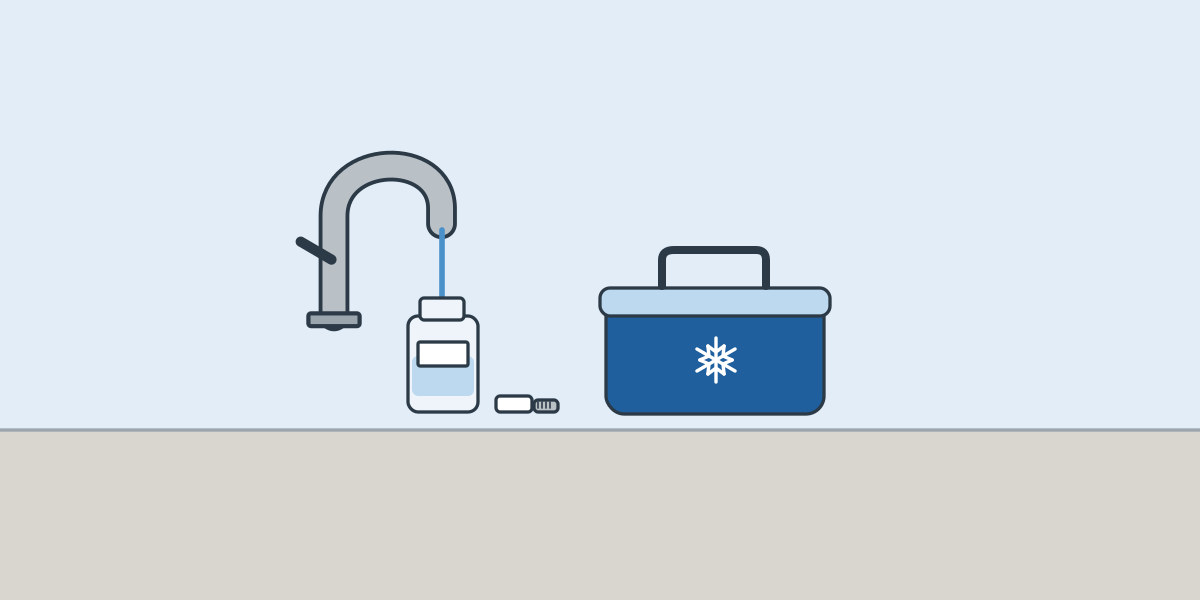
- Get sample bottles from a state-certified lab; your state health department lists them.
- Use a cold tap without a filter or softener on it, and remove the aerator.
- Run the water for several minutes.
- Fill the bottle without touching the inside of the cap or bottle.
- Keep it cold and get it to the lab within the time they give, often 24 hours for bacteria.
Home test strips are useful for hardness or a quick check, but they are not accepted for a home sale and do not replace a lab test.
4Reading the results
The lab report lists each result next to a limit. Those limits are EPA standards for public water systems; private wells are not regulated, so the EPA and your state use them as a guide. For example, the EPA limit for nitrate is 10 mg/L and for arsenic 10 micrograms per liter.
We cannot tell you whether your water is safe to drink. If anything is above a limit, or bacteria are present, call the lab or your state health department and ask what they recommend. A positive bacteria test is usually followed by shock chlorination and a retest.
5Common questions
Can I get a free test?
Some state and county health departments offer free or reduced-cost bacteria and nitrate tests. Search your state health department's private well page.
How long do results take?
Usually 3 to 10 days, faster for bacteria alone.
Do I need to test a new well?
Yes. Drilling can introduce bacteria. Most drillers disinfect a new well and recommend a lab test before use.
How often should you test well water if nothing has changed?
Once a year for bacteria and nitrate, as the CDC recommends. Annual well water testing catches changes you cannot taste or smell; keep each well water test report to compare year to year.
Sources
- Guidelines for testing well water, CDC · accessed Nov 22, 2026
- Protect your home's water, U.S. EPA · accessed Nov 22, 2026
- National primary drinking water regulations, U.S. EPA · accessed Nov 22, 2026
- Water testing price data, HomeGuide · accessed Nov 22, 2026
Drafted with AI from the cited sources; reviewed and approved by Ben Carter. How we write and check guides

Ben Carter, plumber, septic and private well systems. About the author · Editorial policy